نوع مقاله : مقاله پژوهشی
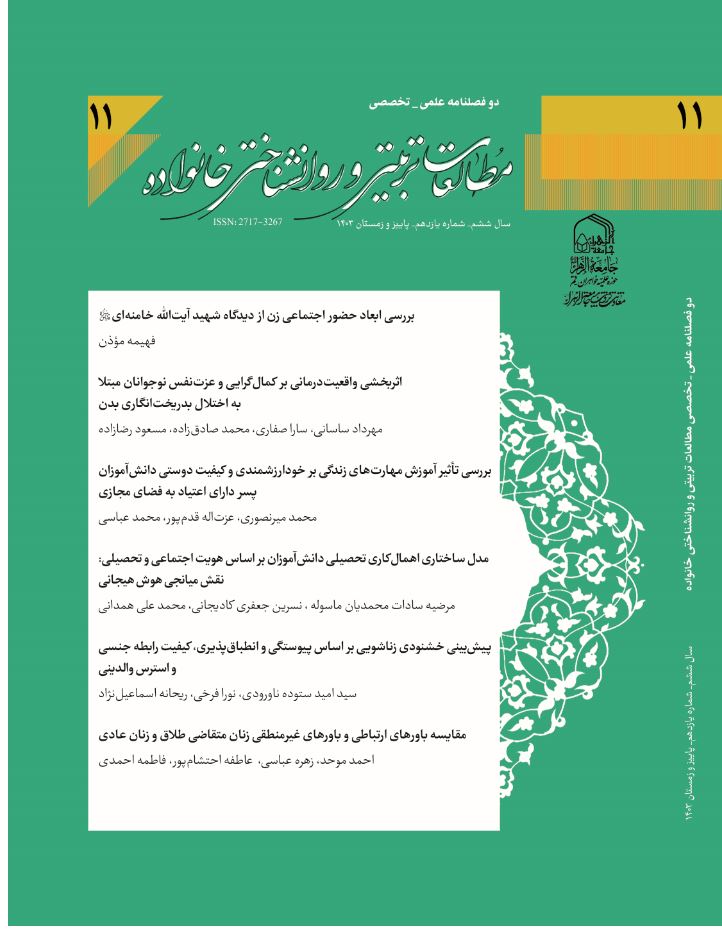
Dimensions of Women's Social Presence from the Perspective of Martyr Ayatollah Khamenei
Fahimeh Moazzen[1]
[1]. Graduate of Level 3 in Jurisprudence and Principles, Jame’a Al-Zahra (PBUH), Seminary and University Instructor – moazzenf114@gmail.com
Abstract
The issue of women's social presence has always been a significant and debatable subject in various societies, and its status and boundaries within the Islamic intellectual and social system have attracted the attention of scholars. This study aims to explain and analyze the dimensions of women's social presence from the perspective of Martyr Ayatollah Khamenei. Employing a descriptive-analytical method and drawing on the statements of the martyred leader of the revolution, this research examines the status and social responsibility of women within the framework of Islamic thought. The findings indicate that in the view of the martyred leader—grounded in authentic Islamic teachings—men and women are equal in terms of human essence, inherent dignity, and the potential for spiritual growth and excellence, with social responsibilities defined as a common duty for both. Accordingly, women's social presence is not merely permissible but considered a social and religious necessity, which can manifest both directly and indirectly across various social domains. The core emphasis of this perspective is that such social presence must occur within the framework of preserving human dignity, observing religious boundaries and standards, and safeguarding the strength of the family institution, such that women's social roles do not undermine family functions. Based on the results, the ideal woman in this intellectual system is one who can balance her individual, family, and social responsibilities while effectively contributing to the progress and excellence of Islamic society. Overall, this perspective offers a balanced model of women's social presence, emphasizing both their human dignity and social responsibility alongside the fundamental role of the family in regulating this presence.
Keywords: Women's social presence, social responsibility, women’s role in society, women’s familil duties, the perspective of Martyr leader, Martyr Ayatollah Khamenei.