نوع مقاله : مقاله پژوهشی
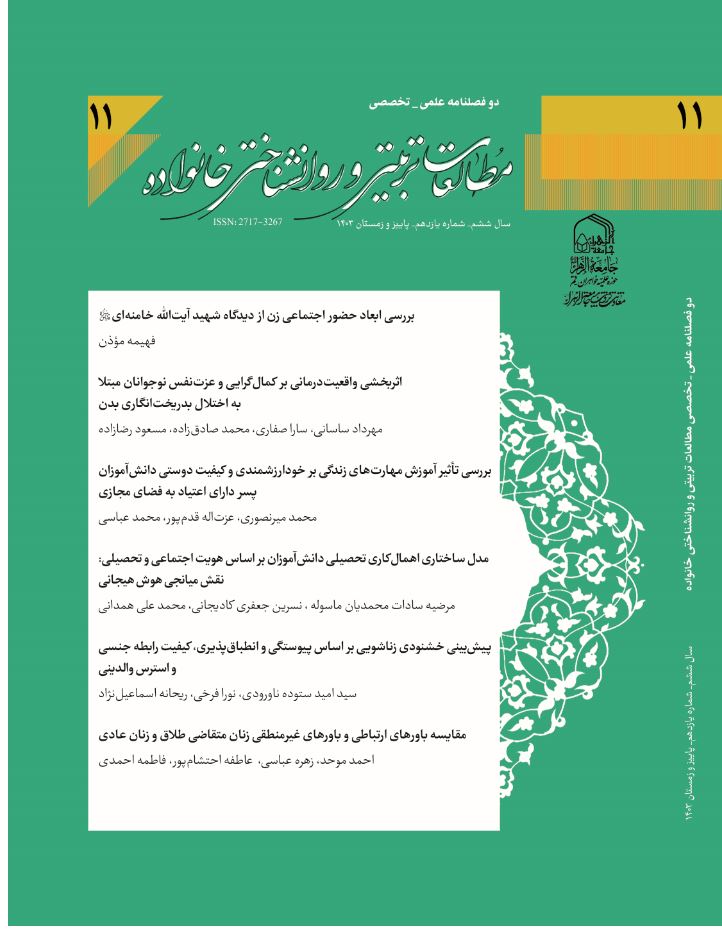
The Effectiveness of Life Skills Training on Self-Worth and Friendship Quality in Male Students with Cyberspace Addiction
Mohammad Mirnasouri[1]
Ezatollah Ghadampour²
Mohammad Abbasi³
[1]PhD Candidate, Department of Psychology, Faculty of Literature and Humanities, Lorestan University, Khorramabad, Iran (Corresponding Author) – modernnmmodernation@gmail.com
² Professor, Department of Psychology, Faculty of Literature and Humanities, Lorestan University, Khorramabad, Iran – ghadampour.e@lu.ac.ir
³ Assistant Professor, Department of Psychology, Faculty of Literature and Humanities, Lorestan University, Khorramabad, Iran – abasi.mo@lu.ac.ir
Abstract
The present study aimed to investigate the effectiveness of life skills training on self-worth and friendship quality in students with virtual space addiction. The research method was quasi-experimental with a pretest-posttest control group design. The statistical population consisted of all male high school students exhibiting symptoms of cyberspace addiction in the academic year 2024-2025. From this population, 40 students were selected using convenience sampling and randomly assigned to experimental and control groups (20 participants per group). Data collection tools included the Young Internet Addiction Test (1999), the Hejazi & Zohrevand Friendship Quality Scale (2001), and the Crocker et al. Self-Worth Scale (2009). The life skills training program was implemented over ten sessions for the experimental group, while the control group received no intervention. Data were analyzed using multivariate and univariate analysis of covariance at a significance level of 0.05. The findings indicated that after controlling for pretest scores, life skills training had a significant positive effect on increasing self-worth and improving friendship quality among students with virtual space addiction (p < .001). Accordingly, life skills training can serve as an effective intervention for enhancing individual psychological resources and improving the quality of interpersonal relationships in adolescents, thereby contributing to the reinforcement of their developmental and social functions within the family and school contexts.
Keywords: Life skills training, internet addiction, self-worth, friendship quality, virtual space dependency.